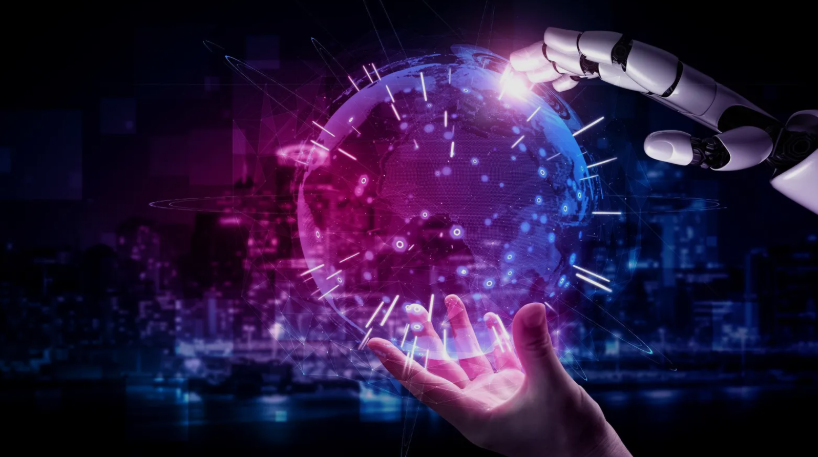
New Technology: How Innovation Is Transforming Our Future
Technology is changing the way we live, work, communicate, and solve everyday problems. From artificial intelligence and smart devices to advanced robotics and clean energy, new technology is creating opportunities that were difficult to imagine only a few years ago.
As innovation continues to accelerate, understanding the latest technologies has become important for individuals, businesses, students, and organizations. New technology is not simply about launching new gadgets—it is about developing smarter, faster, safer, and more efficient ways to solve real-world challenges.
What Is New Technology?
New technology refers to recently developed or rapidly evolving tools, systems, software, and methods designed to improve existing processes or create new possibilities. It can include everything from artificial intelligence and machine learning to biotechnology, renewable energy, robotics, and advanced computing.
Some technologies are designed for consumers, while others are developed for industries such as healthcare, education, transportation, finance, manufacturing, and agriculture.
The rapid development of new technology is also changing the skills people need. Digital literacy, data analysis, cybersecurity awareness, and the ability to work with emerging technologies are becoming increasingly valuable.
Artificial Intelligence and Machine Learning
Artificial intelligence, commonly known as AI, is one of the most influential areas of new technology. AI systems can analyze information, recognize patterns, generate content, assist with decision-making, and automate certain tasks.
Machine learning is a major part of AI. It allows computer systems to learn from data and improve their performance without being explicitly programmed for every individual task.
Today, AI is being used in areas such as customer service, software development, education, medical research, financial analysis, and content creation.
However, the growth of AI also creates important questions about privacy, accuracy, employment, copyright, and responsible use. As these systems become more capable, businesses and governments are increasingly focusing on how AI should be developed and used responsibly.
Smart Devices and the Internet of Things
Another important development in new technology is the Internet of Things (IoT). IoT connects physical objects to networks so they can collect, exchange, and sometimes act on data.
Smart watches, connected home appliances, security systems, industrial sensors, and smart-city infrastructure are examples of IoT applications.
For consumers, connected devices can make everyday activities more convenient. For businesses, sensors can help monitor equipment, track resources, and identify potential problems.
The growth of connected devices also makes cybersecurity increasingly important because more devices and systems are connected to digital networks.
Robotics and Automation
Robotics is transforming many industries by allowing machines to perform physical tasks with increasing precision and consistency.
Modern robots are used in manufacturing, warehouses, healthcare, agriculture, logistics, and research. Automation can help organizations complete repetitive or hazardous tasks while allowing human workers to focus on activities that require judgment, creativity, communication, and problem-solving.
The development of more capable robots could further change workplaces in the coming years. This makes education and workforce training important parts of adapting to technological change.
New Technology in Healthcare
Healthcare is another field where technology is creating significant changes. Digital health tools, medical imaging, wearable devices, robotics, AI-assisted research, and electronic health systems are helping healthcare professionals collect and analyze information more effectively.
Wearable devices can monitor measurements such as heart rate and activity, while advanced software can assist researchers in analyzing large amounts of medical information.
Technology does not replace the need for qualified healthcare professionals. Instead, many technologies are designed to support professionals and improve access to information, communication, and services.
Clean Energy and Sustainable Technology
New technology is also playing an important role in addressing environmental challenges. Solar power, wind energy, battery storage, electric vehicles, smart grids, and energy-efficient systems are examples of technologies being developed to support a lower-carbon energy system.
Improvements in batteries and energy management can help make renewable energy more practical in different applications. Electric vehicles are another example of how technological development can influence transportation.
Sustainable technology is not limited to energy. Innovations in agriculture, water management, recycling, construction, and manufacturing can also help reduce resource consumption and waste.
How New Technology Is Changing Businesses
Businesses are increasingly adopting technology to improve productivity and provide better services. Cloud computing, AI-powered software, automation, data analytics, and digital communication tools can help organizations manage information and serve customers more efficiently.
Small businesses can also benefit from technology. Online platforms allow companies to reach customers beyond their local markets, while digital payment systems and cloud-based tools can simplify everyday operations.
At the same time, companies need to consider cybersecurity, data privacy, employee training, and the cost of implementing new systems.
The Benefits of New Technology
New technology can provide several important benefits:
- Greater efficiency: Automation can reduce the time required for repetitive tasks.
- Better communication: Digital platforms make it easier to communicate across distances.
- Improved access to information: People can access knowledge and services from almost anywhere.
- New business opportunities: Emerging technologies can create new products, services, and industries.
- Improved problem-solving: Advanced computing and data analysis can help address complex challenges.
- Greater convenience: Smart devices and digital services can simplify many everyday activities.
Challenges of New Technology
Despite its advantages, new technology also creates challenges. Cybersecurity threats, privacy concerns, misinformation, digital inequality, and changing employment requirements are some of the issues that society must address.
Another challenge is the speed of technological development. People and organizations may struggle to keep their skills and systems up to date.
Responsible innovation therefore requires more than creating powerful technology. It also requires appropriate regulations, education, security measures, ethical considerations, and public awareness.
What Is the Future of New Technology?
The future of technology is likely to involve greater integration between AI, robotics, connected devices, advanced computing, biotechnology, and clean energy.
Some technologies that are still developing could eventually become part of everyday life, while others may remain specialized tools for particular industries. The exact direction of technological development is difficult to predict, but one thing is clear: innovation will continue to influence how people live and work.
For individuals, staying informed and developing adaptable skills can help them respond to technological changes. For businesses, understanding emerging technologies can help identify new opportunities while managing potential risks.
Conclusion
New technology is transforming society by changing how people communicate, work, learn, travel, receive services, and solve problems. Artificial intelligence, robotics, smart devices, clean energy, and digital systems are only some of the technologies shaping the modern world.
The most important question is not simply how advanced technology can become, but how it can be used responsibly to create meaningful benefits for people and society.
As innovation continues, learning about new technology today can help individuals and businesses prepare for the opportunities and challenges of tomorrow.